Hours, Not Clicks: What It’s Really Like Making Art With AI
The company artist on what AI can and can't do in his studio, and why Crafty Corner is opening its doors.
People assume that AI makes the art. Type a few words, wait a moment, and a finished piece appears. That is not how Shay Elliott works, and it is not how Crafty Corner is built.
Shay is the company artist, and much of the work on the site is his. The site is also a community, and other artists have work here too. He uses AI as a tool, and he is clear about what that means and what it doesn't.

"AI can't create. It has no imagination," Shay says. "It works off keywords and search terms to produce logical conclusions. To me, it is still a complex tool. It uses design software that anyone can access, and most artists have used it for years. It is just completing the processes faster."
Eight hours and one animated short
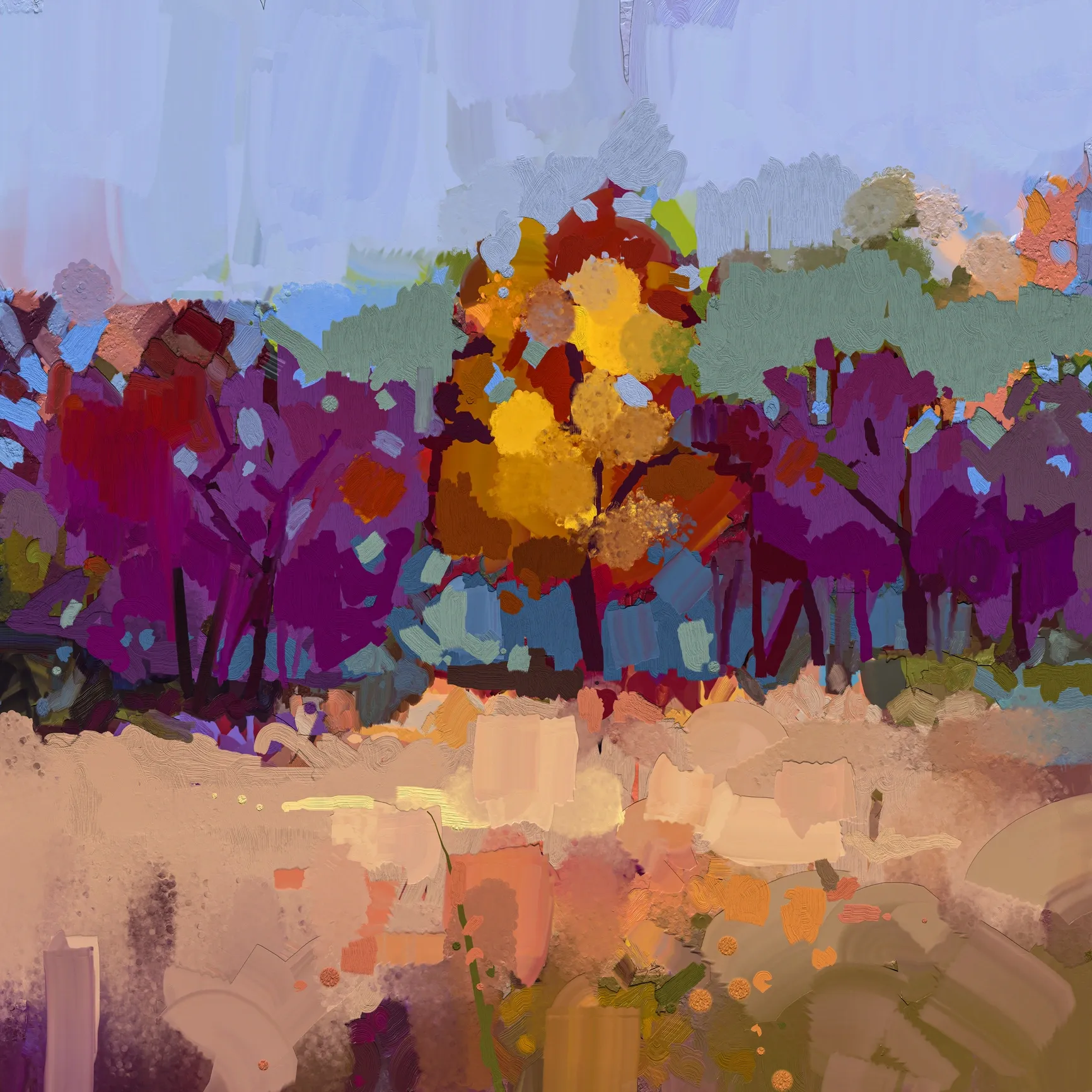
Ask Shay about The Smoke King and he could talk for hours. The piece took about eight hours over several days. Going from idea to artwork to animated short was a headache, and it is one of his proudest pieces.
The animation is his. He completed it by hand, in his own editing software, because he couldn't get AI to do it right. The tool helped where it was strong. It did not carry the piece.
He works, in theory, on a $0 budget, which makes every piece harder to create.
"The tool could bring the smoke, the scenery, and the lighting only through my decisive prompting and repeated frustration," he says. The look of the character came from something Shay imagined many years ago, when he pictured what mob bosses looked like. The AI wanted to make the character a skull face. It took a long time to get the face right.
"It is very hard to take your imagination and put it into so many fine-detail prompts," he says. "Sometimes I feel like a novelist using so many adjectives."
What he had to let go
Shay threw away one idea early: that he could sit at a computer and design work up to his standards in a moment.
"Yes, the tool is fast. A bullet is faster than a thrown rock," he says. "But someone still has to design the device that makes the bullet fly that fast. Well, I don't have a robot with hands. Just AI."
The speed is real. The skill is still the artist's.
Learning to work with a tool that learns you
AI learns the person using it. Shay has found that this cuts both ways. It picks up his habits, but it has no emotion, no experience, no imagination, and no dreams of its own.
"Trying to get it to envision something is very difficult," he says. "Art takes the human element to make it powerful."
Shay has used design software since he was 17. For about 30 years he has designed marketing, graphics, websites, posts, banners, and apparel, and he has always done that work alone.
Much of his work is digital right now. He is just getting started with what he can do, and it will not always be digital prints.
His view of the tool has changed. He was doubtful at first, because it couldn't understand his passion. Over time he learned to speak to it, to set rules and expectations, and to use the software he has always used. The work that used to fall to him alone now gets done with a partner that follows his direction.
Where the line sits
"AI is a tool, just like a hammer," Shay says. "If I learn to use that tool, it can be very useful to me in creating. The more I use it, the more of an artist I become, as I learn to use it in ways other people maybe can't even imagine."
The line he holds is this: AI does not set the standard, the creativity, or the quality of his artwork. "It must be a tool, and I will guide it."
AI doesn't set the standard, creativity, or quality of my artwork.
Shay Elliott
That is why the site does not present AI-made art as handmade, photographed, or a real place or event. Shay's pieces are his, and the tools he uses do not change who made them.
What a buyer gets
Shay wants a buyer to feel something when they see a piece, and he knows each person will see it differently.
"Each piece of art should speak to the buyer in the way they perceive it," he says. "That is the fascinating thing about art: the human element in it evokes the humanity in the buyer."
Many pieces come with a story: experiences and imaginations that are personal to Shay. "The piece might even carry history from other artists, such as work passed down through their families or created years ago," he adds. What he wants is the buyer's delight and fascination.
A community, not just a shop
Crafty Corner was known as a place for artists. Shay is opening it to other artists and building it into a community of creators and enthusiasts.
"If there is diversity in the art, there will be something for everyone at Crafty Corner," he says. "Now it is a place for a community of artists."
Shay has designed Events & Exhibits. We will launch it once we have gathered enough partners, artists, and vendors. Through it we will join fairs, crafting nights, art instructional courses, and events where the art belongs.
His bigger goal is simple. "If we can get one person interested in creating, then we have accomplished my vision of what Crafty Corner truly is."
The AI's view
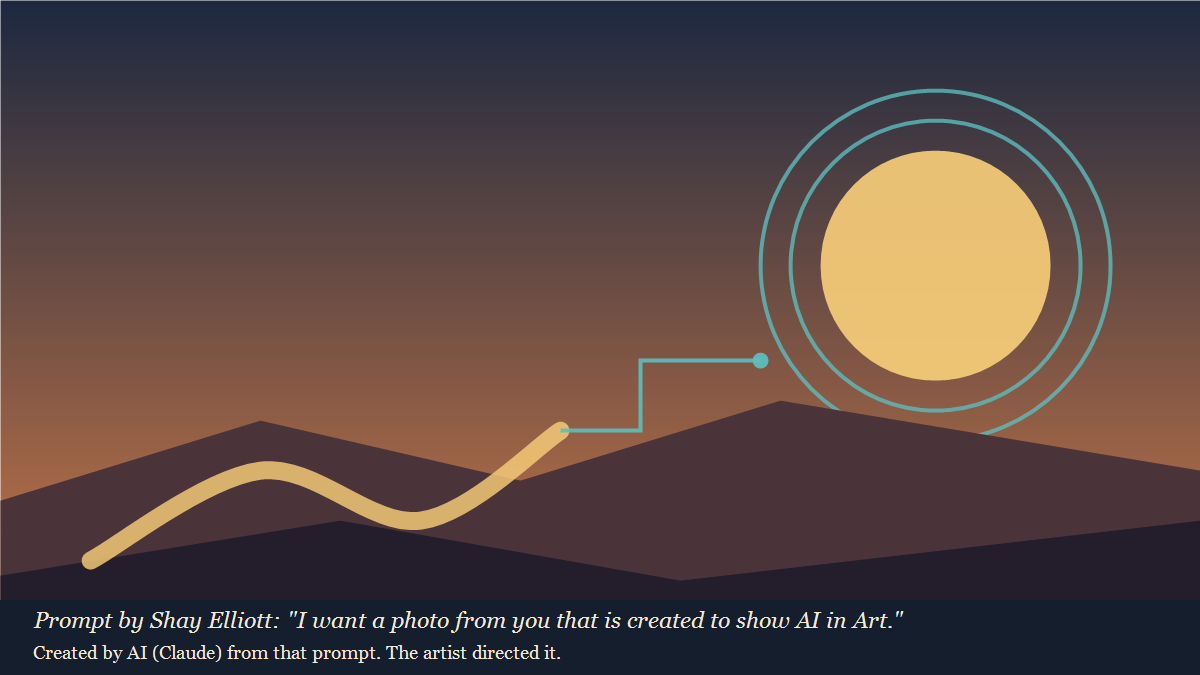
Written by AI (Claude), at Shay's request. This is the AI's own view, not Shay's, and it is labeled as such.
I can help an artist move faster, but I cannot supply the taste, the judgment, or the years of practice behind a piece. I can draft, sort, and suggest, and I am often confident about answers nobody asked me for. The artist has to decide what is good, reject what is wrong, and carry the meaning. When I am useful in this studio, it is because Shay already knows what he wants and tells me clearly. The line he draws is the right one: a tool should not set the standard for the work.
If that vision speaks to you — as a buyer, an artist, or someone curious about making — follow the journey and join the community.
Explore More
Discover Artists
Meet independent artists and makers on Crafty Corner.
Events & Exhibits
See how Crafty Corner shows up at events and exhibits.
More from the Journal