


Description
The concert hall is drowning, but the music has not ended.
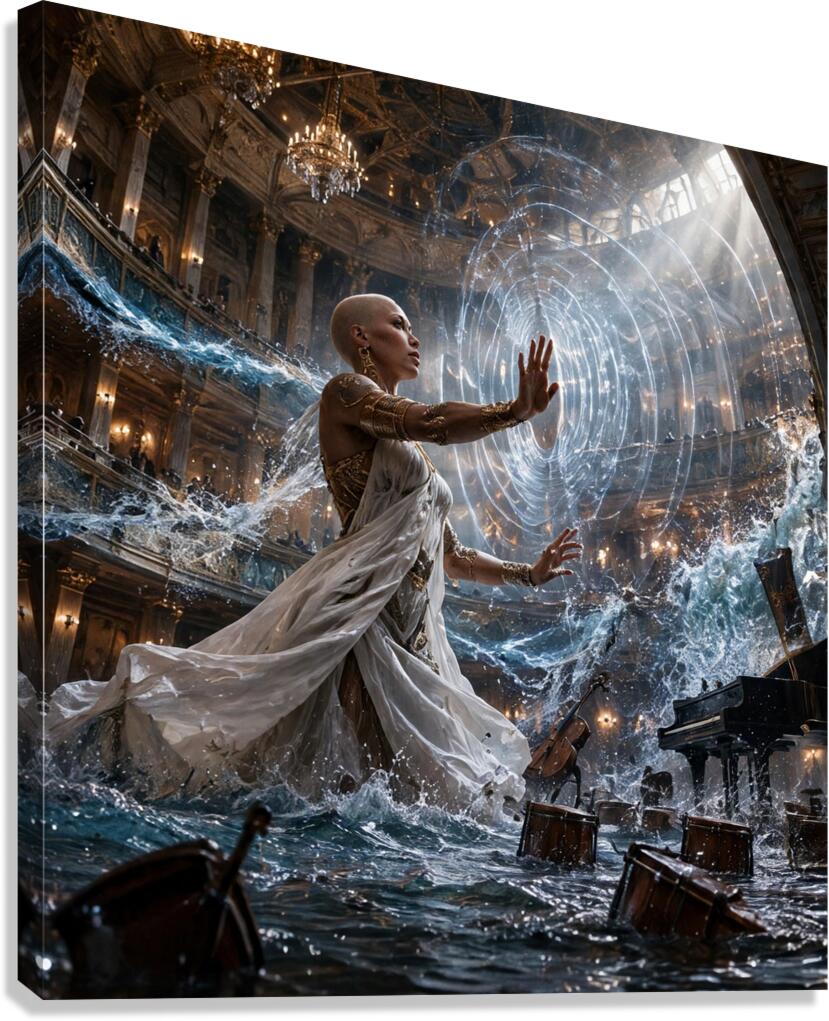
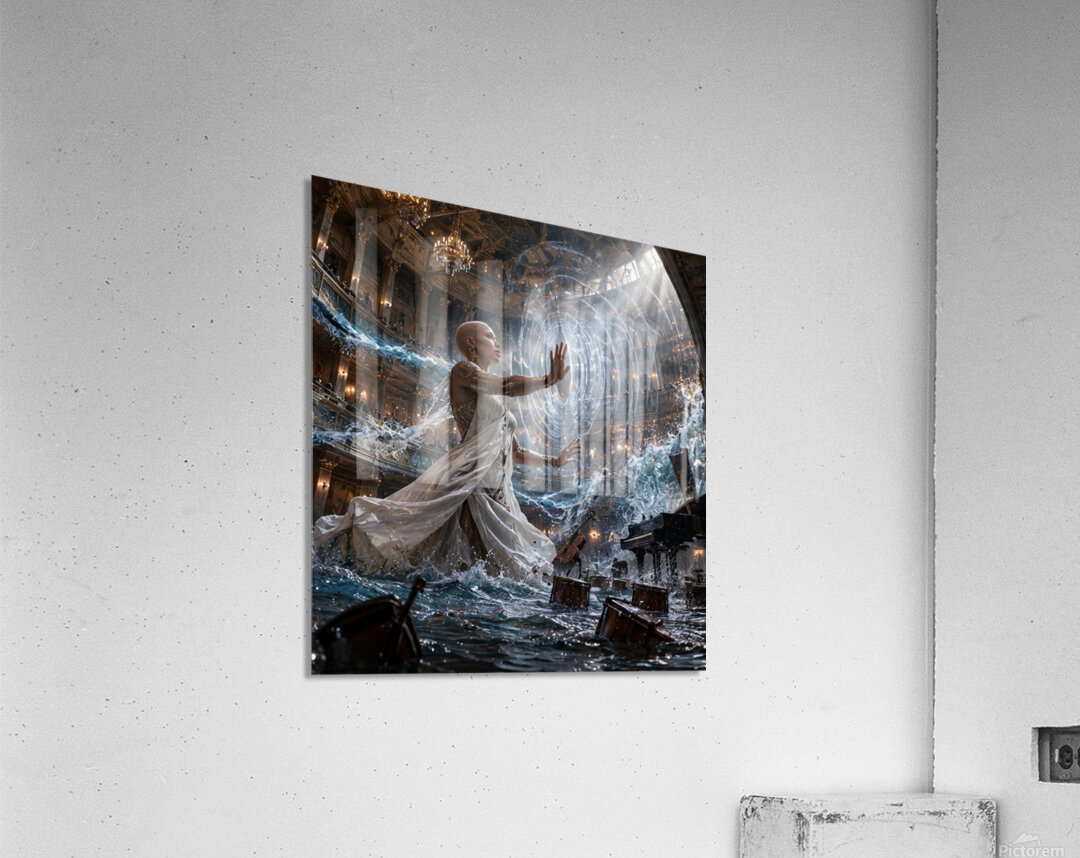
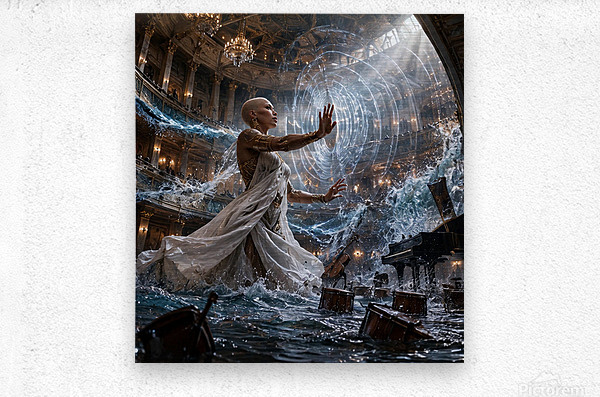
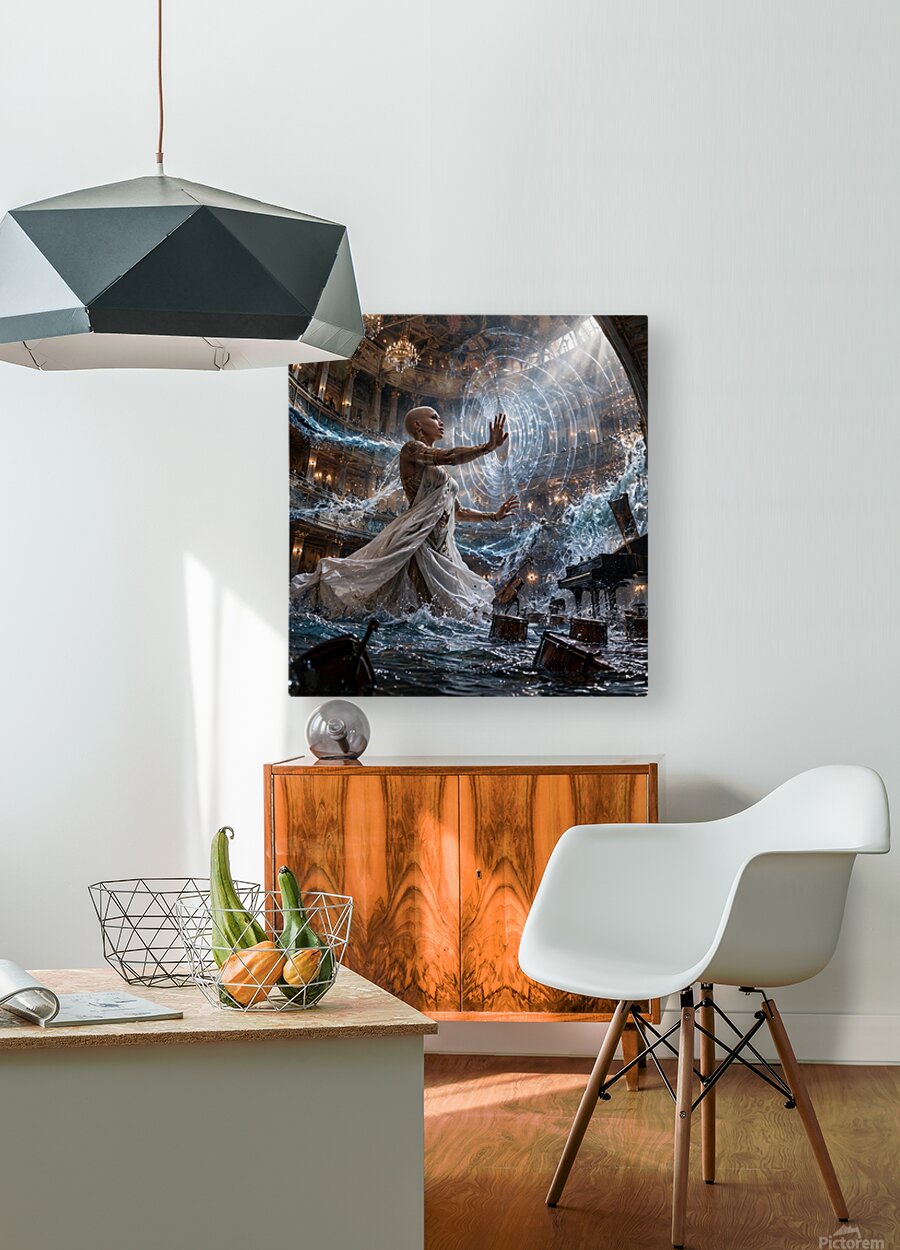
Within a magnificent, centuries-old concert hall, an extraordinary heroine stands amid rising floodwaters, transforming destructive sound into an intricate architecture of shimmering energy. Violent currents sweep through the gilded balconies, overturning instruments and engulfing the grand piano, while enormous concentric waves of translucent blue light radiate from her outstretched hands.
Ariselle Veyne, known as the Last Conductor, cannot hear the destruction surrounding her. Yet she understands its vibrations more intimately than anyone alive.
Once a celebrated acoustic engineer who lost her hearing during an experimental resonance catastrophe, Ariselle discovered that her altered nervous system could physically interpret and redirect mechanical vibrations. What others experience as sound, she perceives as intricate patterns of pressure, movement, and structural tension.
Her abilities allow her to reshape destructive acoustic energy into protective barriers, redirect shock waves through solid architecture, and temporarily stabilize structures threatened by resonant collapse.
However, her abilities cannot create energy from nothing. Every redirected vibration must be absorbed, transferred, or dissipated. Excessive exposure can overwhelm her nervous system, leaving her temporarily unable to perceive the vibrations upon which her powers depend.
The Scene —
Dressed in flowing ivory fabric and elaborate golden armlets, Ariselle stands motionless against the violence of the flooding auditorium. Her commanding presence contrasts with the destruction surrounding her.
A grand piano tilts precariously above the rising water. Percussion instruments drift through the currents, while a cello remains caught among the debris. Above, enormous chandeliers illuminate the ornate balconies, where distant figures witness an impossible act of preservation.
From Ariselle’s raised palm, an immense circular formation of concentrated acoustic energy expands through the hall. Its luminous rings intercept the destructive vibrations traveling through the building, preventing the ornate structure from collapsing upon those trapped inside.
The irony is central to the artwork: a woman who cannot hear the music becomes the only person capable of saving the hall in which it was meant to be heard.
Aria of Tides — The Last Conductor examines the relationship between perception and ability, revealing how an apparent limitation can coexist with extraordinary strength. Its collision of architectural grandeur, rising water, and visible sound transforms an impending catastrophe into a powerful portrait of resilience and unconventional heroism.






Reviews
There are no reviews yet.