Description
Some trucks spend their lives polished and protected, brought out only when the weather is perfect. Others earn every dent, every scratch, and every mile etched into their aging metal. This old pickup belongs firmly to the second kind.
Its rounded fenders, broad chrome grille, circular headlights, and sturdy wooden bed rails recall an era when trucks were built for hauling more than cargo. They carried lumber for new homes, tools for long workdays, livestock feed for hungry animals, and generations of memories along roads that rarely appeared on maps.
The story of this particular truck begins on a small family farm, where it served three generations without ever receiving the retirement its owners occasionally promised. Its paint faded, its seat wore thin, and its engine developed a stubborn rattle that everyone recognized long before the truck came into view. Yet every morning, it started, ready for whatever the day demanded.
One autumn afternoon, its longtime owner loaded the bed with the last few wooden crates from an empty barn. The farm had been sold, the equipment was gone, and the fields would soon belong to someone else. Before leaving, he parked the truck beside the old gravel road and stood looking at it. The cab still held the faint smell of dust and engine oil. The steering wheel had been worn smooth by hands that were no longer there. For a moment, he could remember every journey that had begun behind that windshield.
He turned the key, listened to the familiar engine catch, and drove toward town one final time.
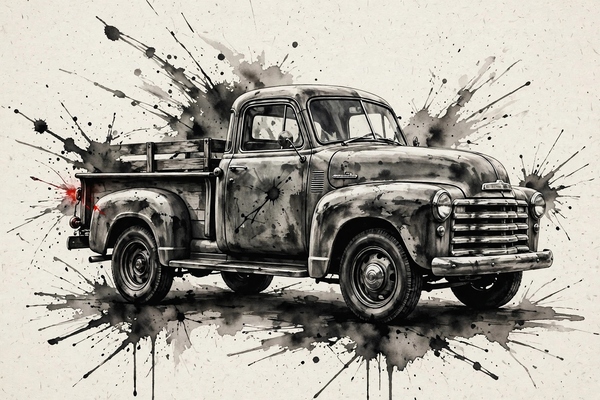
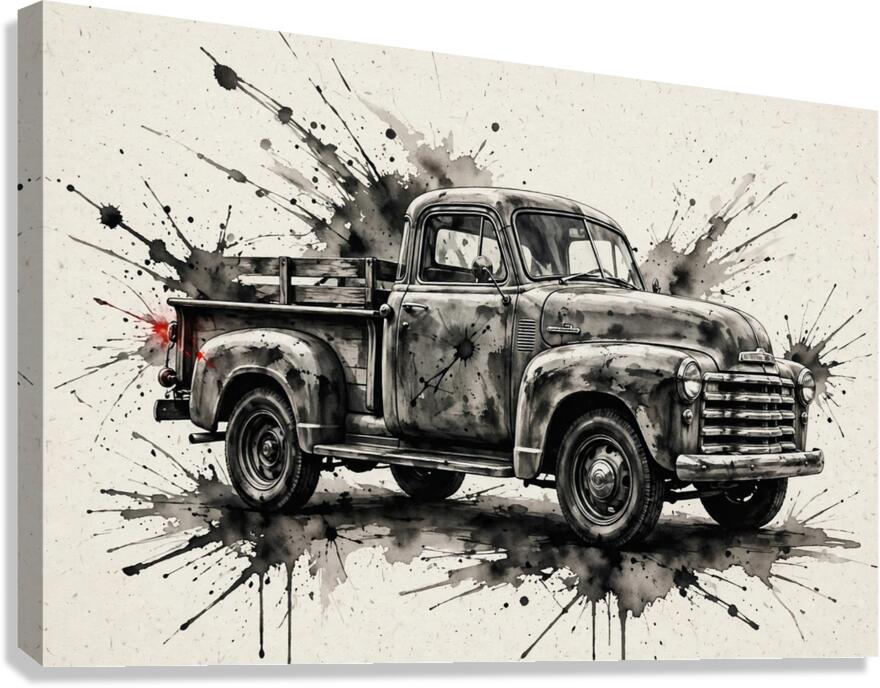
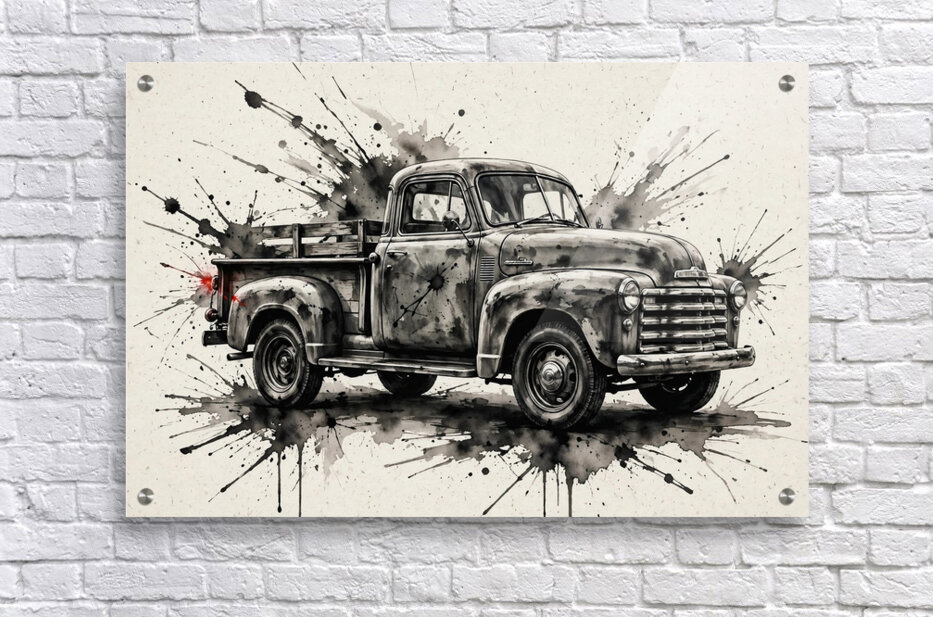
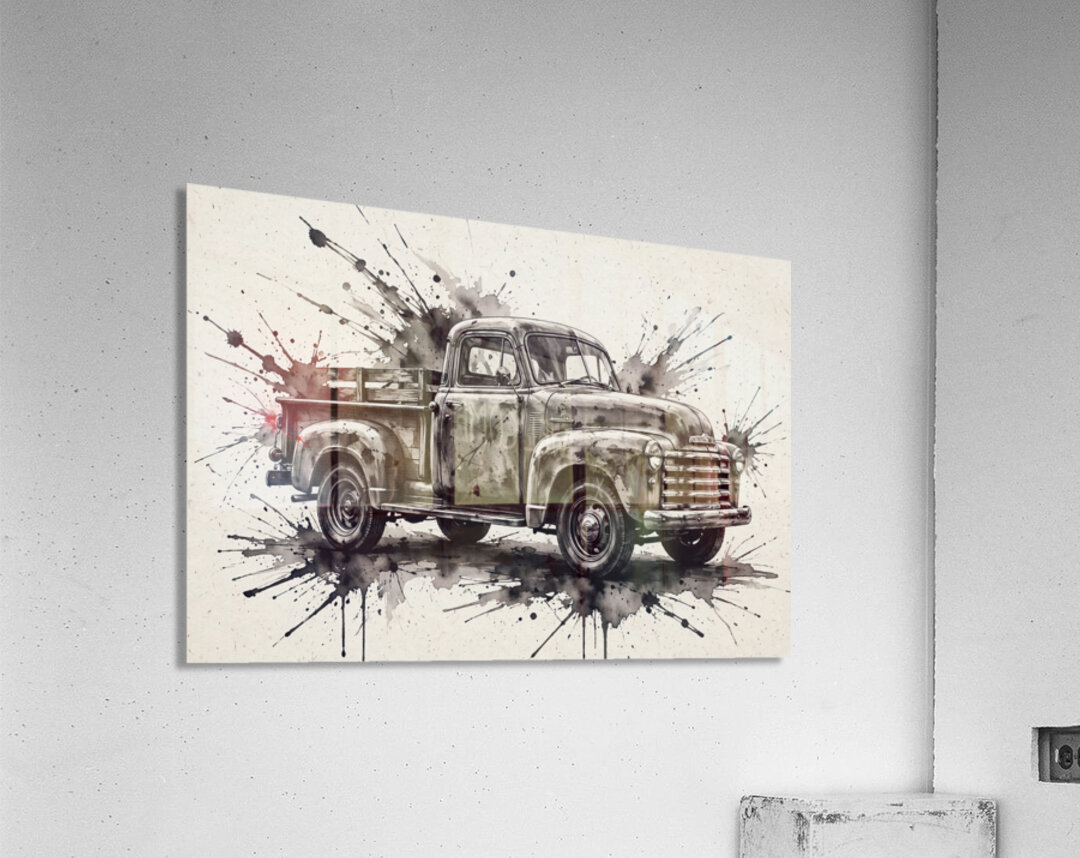
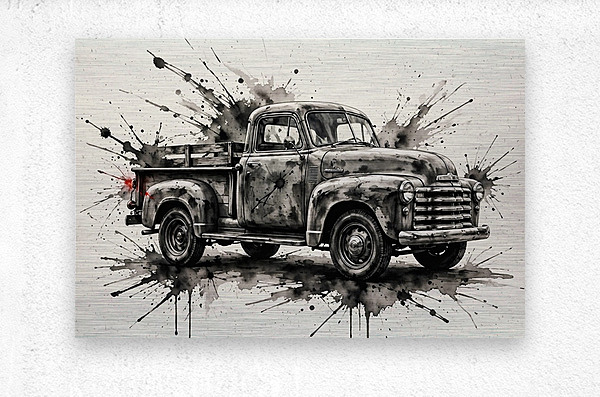
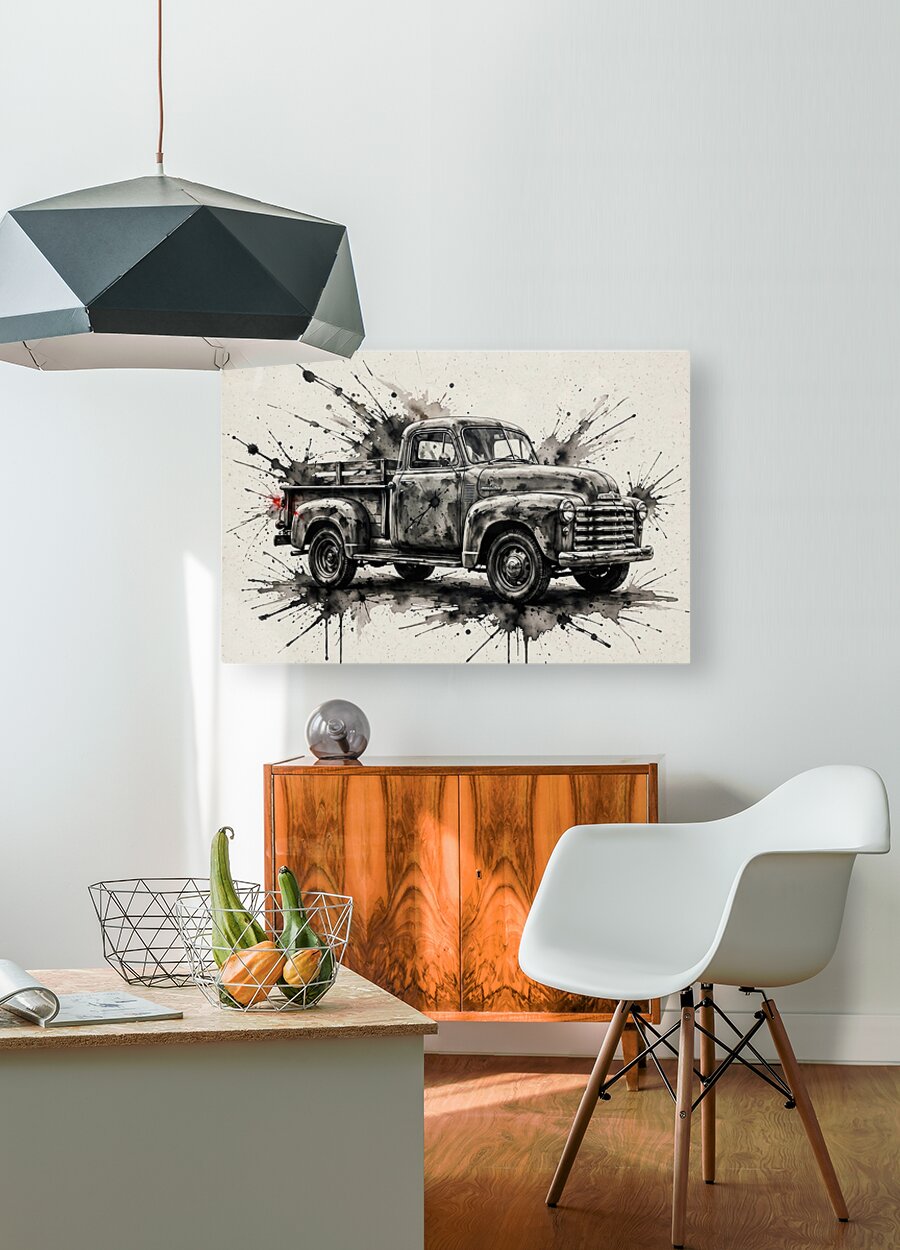
The artwork captures the truck as though that moment has been pulled from memory and preserved in an explosion of charcoal-like shadows and ink. Rendered in a dramatic three-quarter view, the vintage pickup commands the composition with its substantial body, heavy front bumper, prominent grille, and deeply shaded wheel wells. Its broad hood and gracefully curved fenders reveal the unmistakable character of mid-century American automotive design, while its upright cab and wooden cargo rails speak to a life built around practical work.
Layers of black, charcoal gray, and weathered silver create the impression of aged metal marked by years of service. The tires and chrome hubcaps are defined through carefully controlled highlights and dark detailing, giving the vehicle a convincing sense of weight and solidity.
Behind the truck, sweeping black and gray ink splatters burst outward across a warm, off-white background. Long streaks, scattered droplets, and irregular washes create an energetic contrast with the vehicle's grounded, stationary presence. A few restrained touches of deep red near the rear of the truck interrupt the monochromatic palette, adding a small but striking visual accent.
The digital artwork combines the expressive appearance of charcoal illustration with the unpredictable energy of ink-splatter painting. Its textured background and high-contrast shading evoke an old photograph transformed into something more immediate and dramatic.
There is no elaborate landscape or busy roadside scene to distract from the truck. The surrounding space leaves the vehicle alone with its history, allowing its battered surfaces, sturdy proportions, and unmistakable silhouette to tell the story.
The Last Haul of Yesterday celebrates the working vehicles that became part of the families who owned them. It recalls an age when a truck could outlast the barn it served, the roads it traveled, and nearly everything it was originally purchased to carry.






Reviews
There are no reviews yet.