Description
The rose appeared on the piano before the first rehearsal.
It was small, freshly cut, and placed beside the sheet music with such care that the pianist assumed someone had left it for a performer. There was no card, no ribbon, and no indication of who had brought it. When the stage manager asked whether it should be removed, the pianist shook her head.
“Leave it. Perhaps it belongs to the music.”
The composition she was preparing had never been performed in public. Its score had been discovered among the papers of a composer who had spent years revising the same work without ever declaring it finished. Certain passages were meticulously notated; others were crossed out and rewritten until the page resembled a struggle between competing melodies.
At the first rehearsal, the pianist discovered why.
The opening was measured and restrained, with each phrase falling neatly into place. Then the music changed. The left hand began a relentless sequence of low notes while the right moved through abrupt, brilliant chords that seemed determined to interrupt it. The rhythms collided, separated, and returned with greater intensity. Every attempt to settle into a familiar pattern was overturned by another unexpected passage.
By the final page, the pianist understood that the composer had not been searching for a perfect resolution. The piece was an argument between order and impulse, between the discipline required to master an instrument and the emotions that refuse to obey it.
When the last chord faded, the rehearsal room remained silent.
The pianist looked at the little rose beside the score. It had not moved.
The following evening, she performed the composition exactly as written, including the passages that seemed almost too unruly to control. When the audience rose, she did not take the flower with her. She left it where it had been placed, a quiet offering to the music rather than to the person who played it.
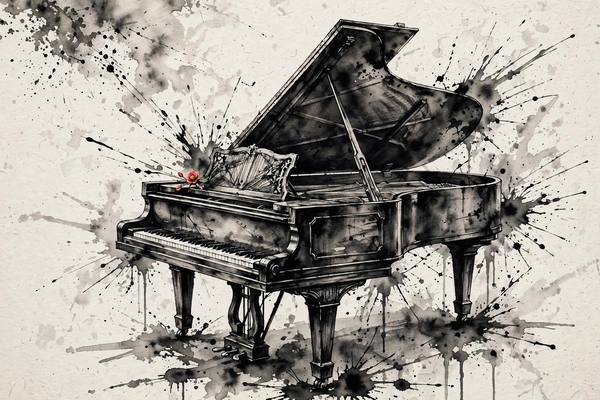
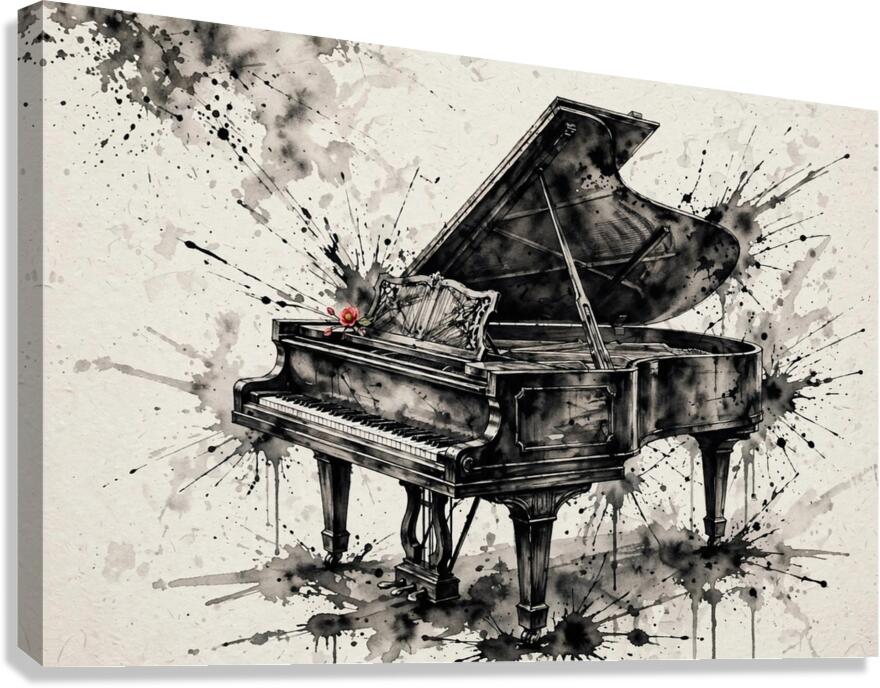
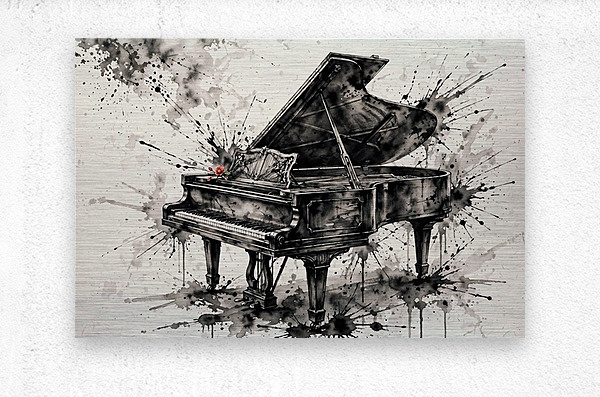
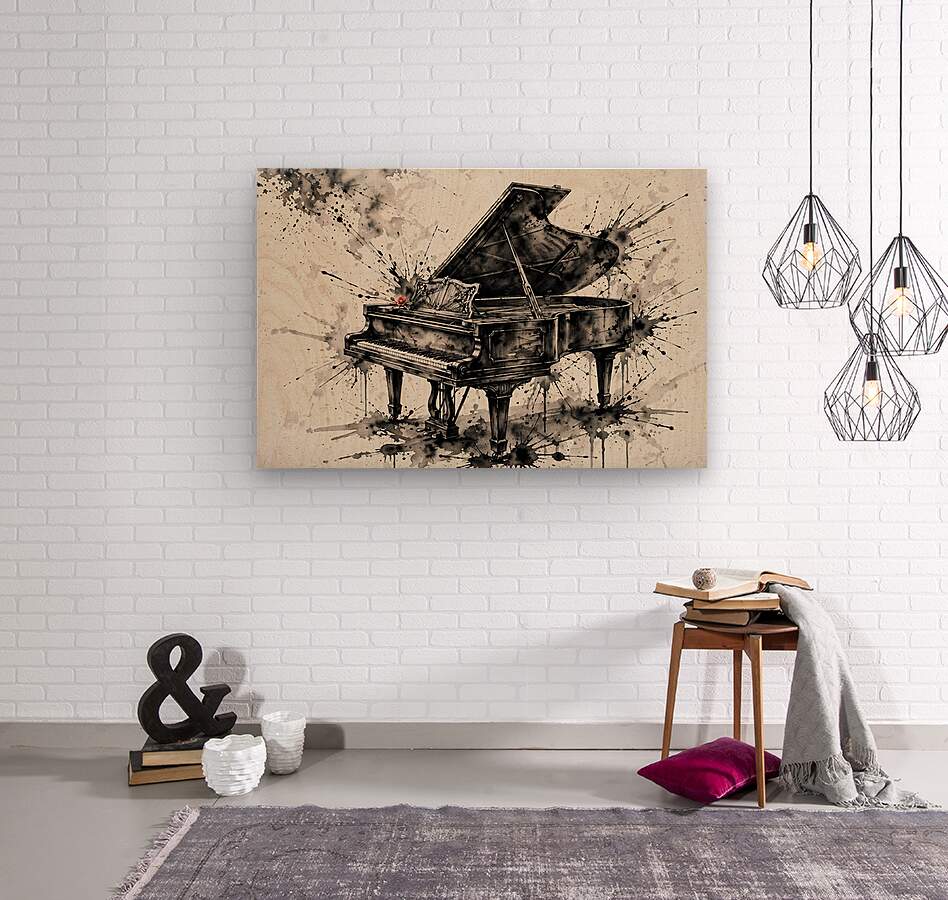
A Rose for the Music captures that meeting of discipline and abandon through a striking monochromatic digital artwork with the appearance of charcoal drawing and expressive ink wash.
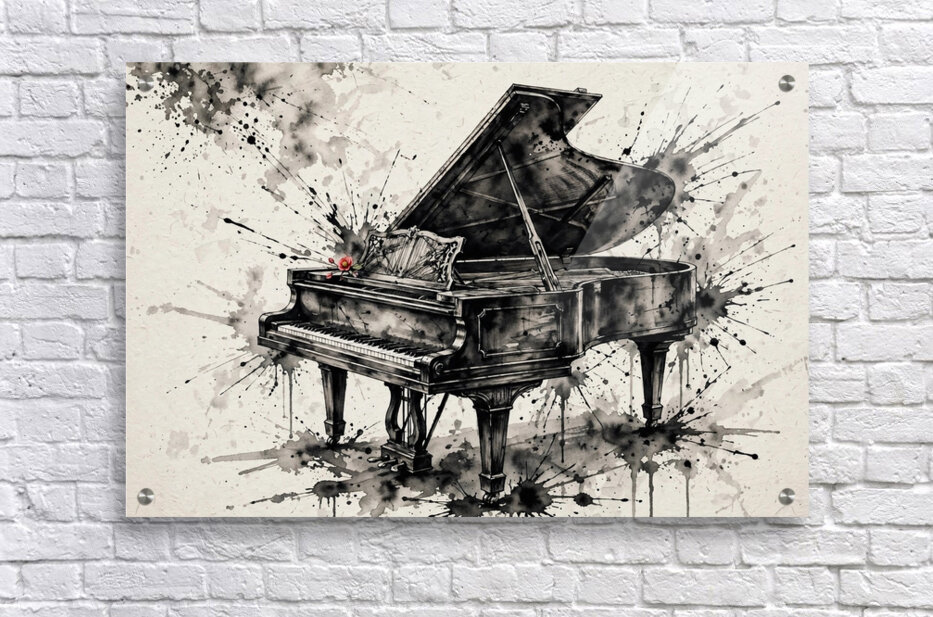
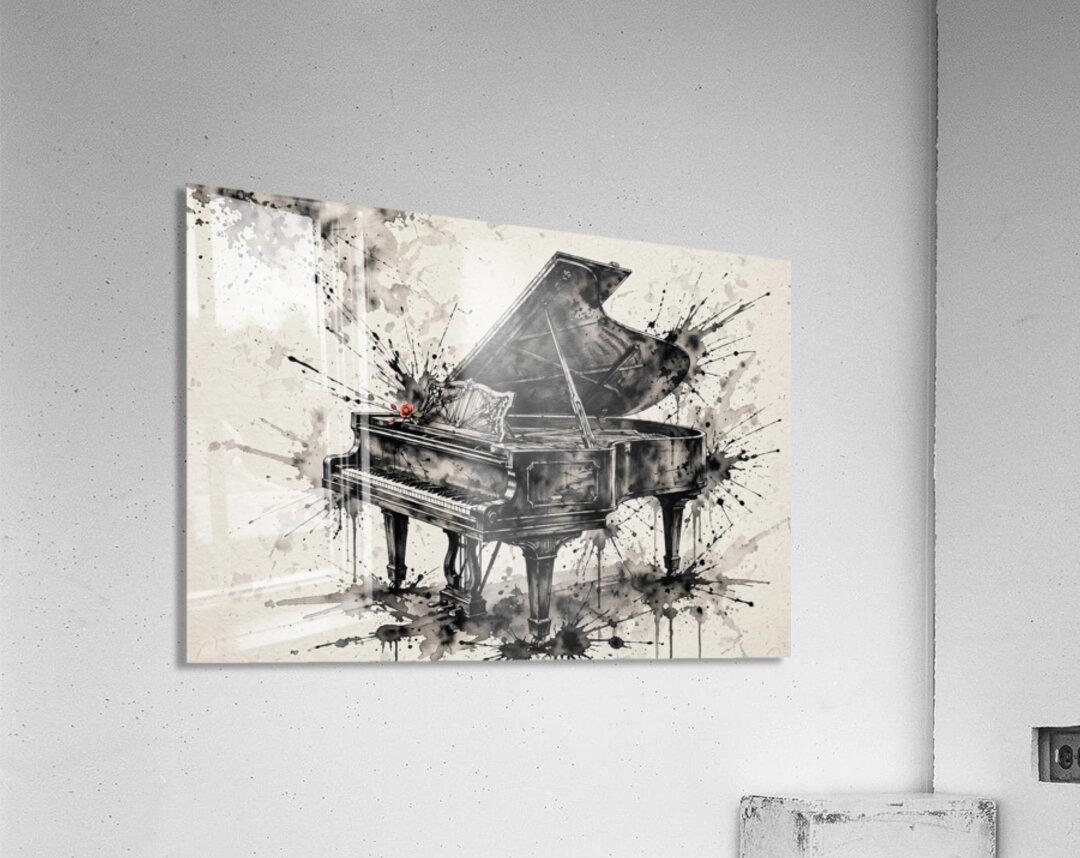
A magnificent black grand piano occupies the center of the composition, its raised lid extending upward in a bold diagonal. The keyboard stretches across the foreground, each key carefully articulated beneath the sweeping contours of the instrument. Delicate crosshatching, layered gray shading, and strong black outlines define the piano's curved body, structural supports, legs, and pedals.
Beyond the instrument's precise construction, the composition becomes wonderfully unruly.
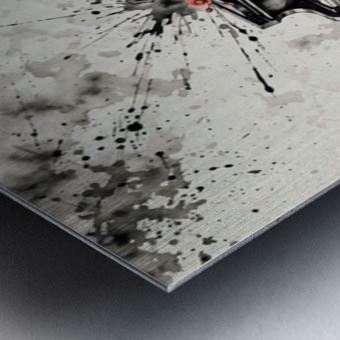
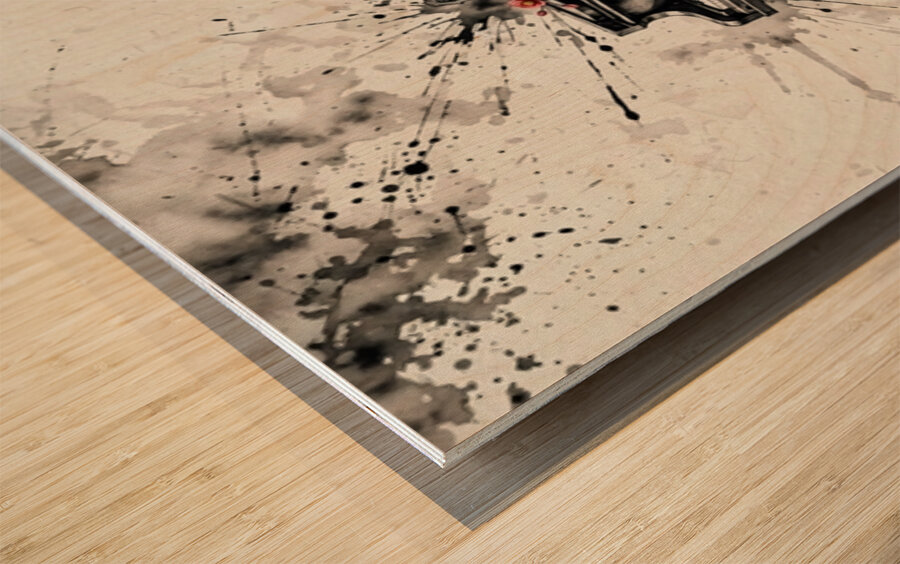
Dark ink bursts outward behind the raised lid and around the keyboard, scattering across the pale, paper-like background. Fine droplets shoot in multiple directions, heavy black stains gather into turbulent shapes, and diluted gray washes spread through the surrounding space. Long, uneven drips descend from several splashes, giving the impression that the music has left its orderly notation and taken on a physical life of its own.
The contrast is especially compelling: the piano remains solid, recognizable, and carefully rendered, while the surrounding ink behaves with complete freedom. Its explosive marks suggest forceful chords and sudden crescendos; the softer washes evoke passages that linger after the notes have ended.
And there, resting near the music stand, is the rose.
Its small pink bloom provides the artwork's only conspicuous touch of color. Against the powerful black-and-white composition, the flower draws the eye without competing with the instrument. It is neither an extravagant bouquet nor a theatrical decoration. Its significance comes from its simplicity—a modest gesture of appreciation placed beside something capable of producing extraordinary emotion.
The rose does not belong to an audience, a composer, or a performer. It belongs to the music itself.
With its combination of intricate piano illustration, dramatic abstract ink, restrained color, and thoughtful visual symbolism, A Rose for the Music celebrates the tension between musical precision and unrestrained expression—and the quiet gratitude that remains when both have been heard.






Reviews
There are no reviews yet.