Description
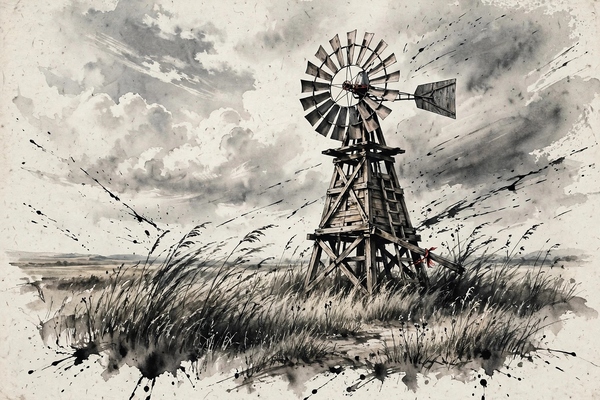
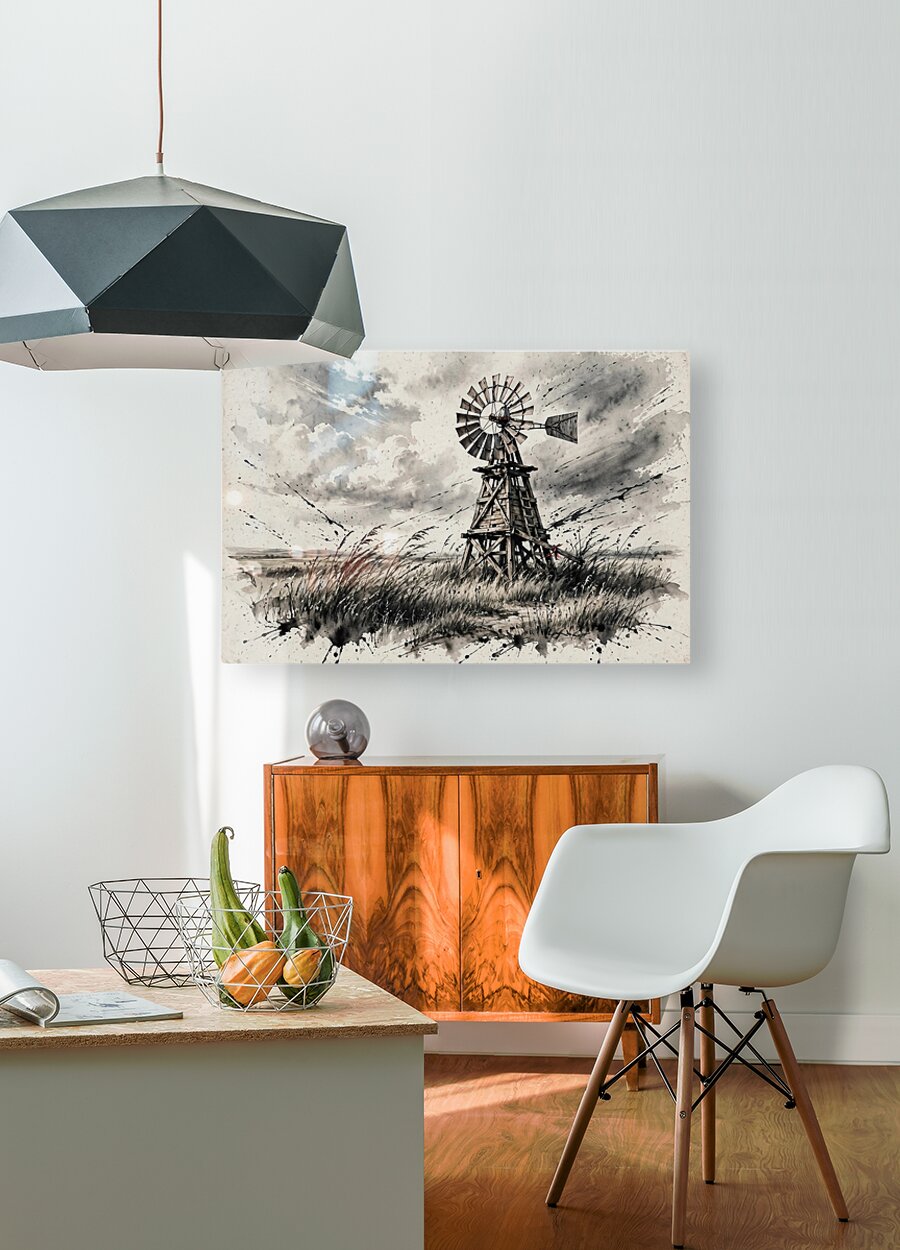
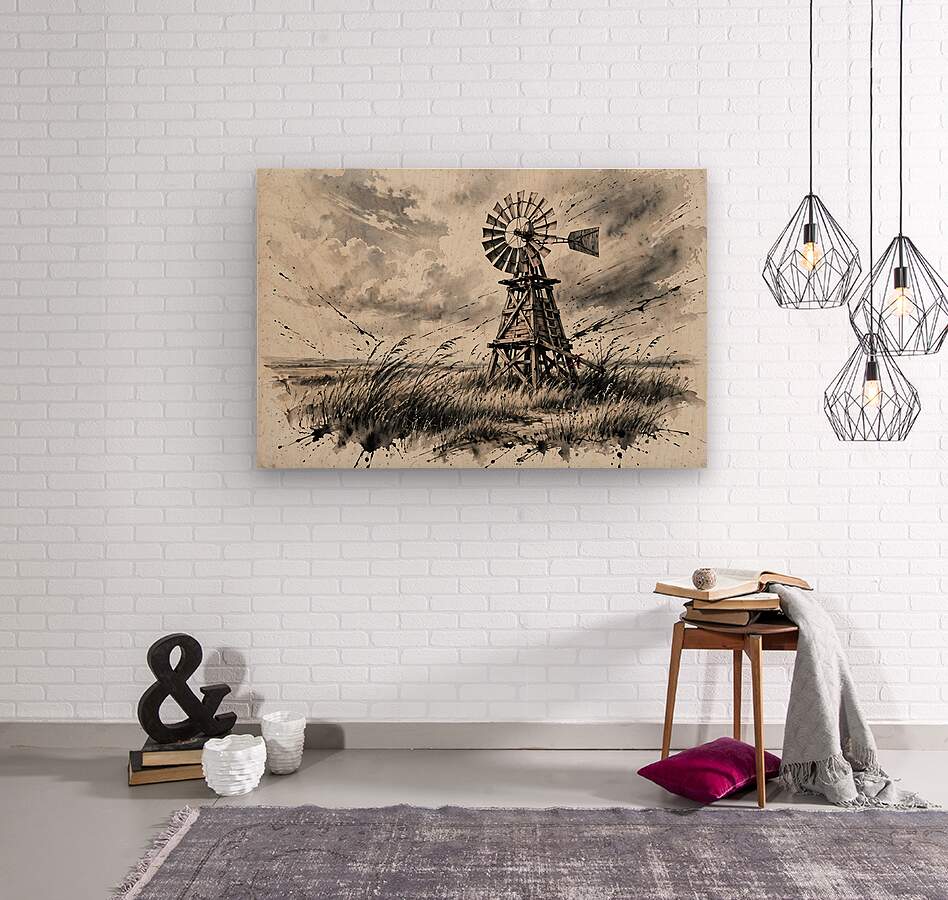
A weathered farm windmill rises above an open expanse of prairie grass, its broad metal blades facing a restless sky filled with sweeping clouds. Supported by a sturdy, cross-braced wooden tower, the aging structure stands as a familiar landmark of the American countryside, where windmills once supplied precious water to livestock, gardens, and isolated homesteads. Tall grasses bend beneath the passing gusts, while a small red ribbon tied to the lower framework introduces a curious touch of color.
Old-timers in Coyote County used to say that everything worth finding was west of the windmill. For years, a stubborn rancher named Amos Bell used his weathered windmill as the starting point for directions, whether someone was looking for a missing calf, a fishing hole, or his notoriously hidden whiskey still. When a traveling salesman asked where the nearest town was, Amos simply pointed west. Three hours later, the furious salesman returned, having found nothing but prairie and rattlesnakes. Amos scratched his chin and replied, “Well, I never said how far west.” After that, the phrase became a local joke, and someone tied a red ribbon to the windmill so even the most hopeless traveler could recognize the landmark.
West of the Windmill captures the expansive character of the American prairie through a dramatic combination of rustic architectural detail, windswept vegetation, and expressive charcoal-style illustration.
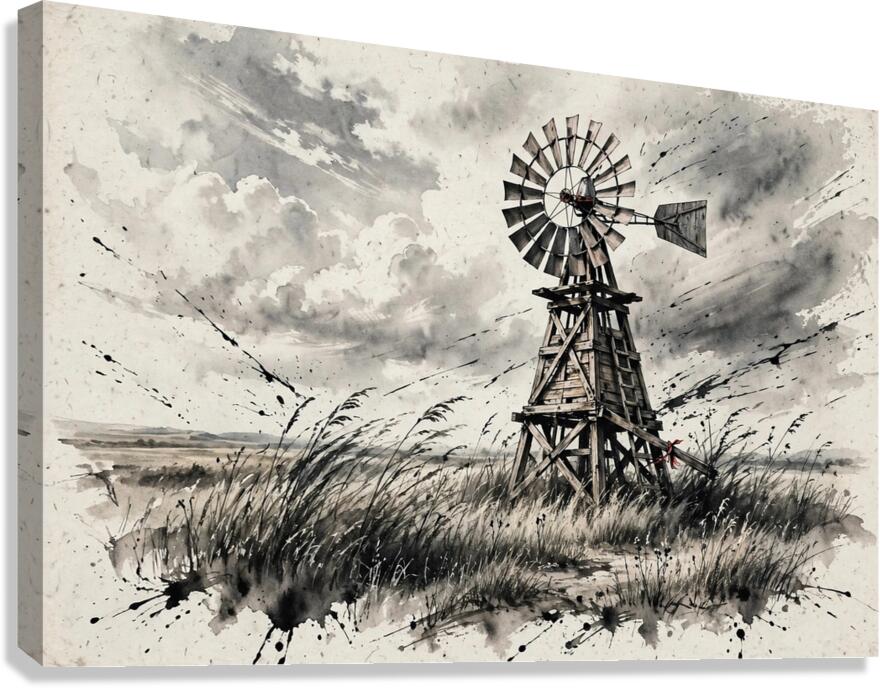
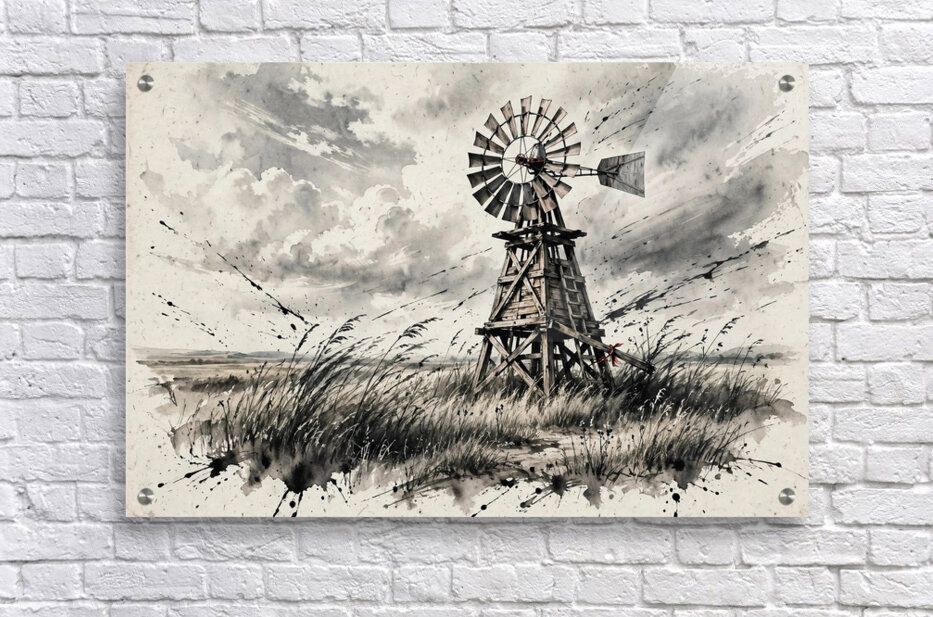
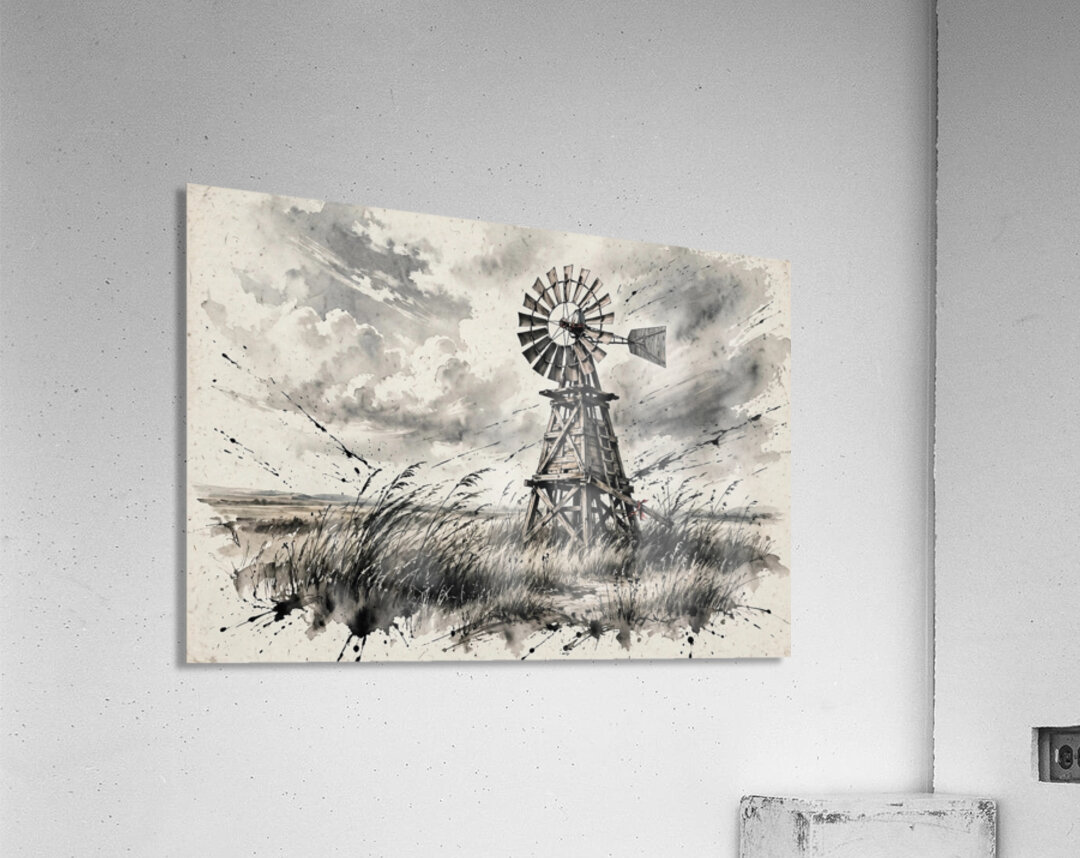
The windmill stands slightly right of center, its circular arrangement of metal blades forming a striking silhouette against the cloudy sky. Its rectangular tail vane extends outward behind the wheel, while the weathered wooden framework beneath reveals an intricate arrangement of diagonal supports, horizontal braces, and structural beams. Carefully placed shadows emphasize the aging wood and worn metal surfaces, suggesting decades of exposure to the elements.
Across the foreground, tall grasses lean in sweeping directions, their delicate stalks and seed heads rendered through fine, energetic strokes. The nearly treeless horizon stretches into the distance, reinforcing the openness and isolation of the landscape.
Above, broad formations of gray clouds gather across the sky, interrupted by lighter patches that give the scene depth and movement. Dramatic black ink splatters, scattered droplets, and long, sweeping marks extend beyond the landscape onto a warm, off-white background. These expressive elements echo the invisible force of the wind and contrast with the carefully defined structure of the windmill.
The small red ribbon tied to the lower tower provides the artwork's sole vivid color accent. Against the predominantly black, white, and gray palette, it becomes an understated but memorable detail, suggesting a personal marker left behind in an otherwise expansive wilderness.
Created as digital artwork with the appearance of traditional charcoal illustration and expressive ink-wash painting, the composition blends detailed rural imagery with an energetic, weathered aesthetic.
West of the Windmill celebrates the humor, resourcefulness, and distinctive character of prairie life. Its solitary windmill, restless grasses, and far-reaching horizon recall a landscape where landmarks mattered, directions were sometimes questionable, and a good story could travel farther than the person who started it.




Reviews
There are no reviews yet.